
THE AUSTRALIAN HAYDN ENSEMBLE
The Australian Haydn Ensemble (AHE) was founded in 2012 by Artistic Director and Principal Violinist Skye McIntosh and is now in its fifteenth year. AHE has established itself as one of Australia’s leading period-instrument groups, specialising in the repertoire of the late Baroque and early Classical eras. It takes its name from the great Joseph Haydn, a leading composer of the late 18th-century.
AHE’s flexibility and inventiveness are inspired by Haydn’s fabled originality and the virtuosic musicians he worked with at the court of Esterházy for almost 30 years. It performs in a variety of sizes and combinations, ranging from quartet, quintet or septet, to chamber orchestra with special guest soloists to a full orchestra with choir.
The Ensemble has developed a flourishing regular series in Sydney, performing at the City Recital Hall, ACO On The Pier, and the Utzon Room, Sydney Opera House; in Canberra, at the National Gallery of Australia. AHE also performs throughout regional NSW and presents education workshops to students of all ages, focusing on imparting 18th-century historical performance techniques.
AHE is particularly interested in presenting unusual programs of 18th-century chamber versions of works by Haydn, Mozart and Beethoven, as well as presenting the music of emerging composers and lesser-known composers, such as Boccherini, Wranitzky and Mysliveček.
To commemorate its 10th anniversary, the Ensemble recorded its third CD, entitled The Mozart Album, released in 2024. In October 2023 AHE undertook its first international tour of the United States, including performances at Carnegie Hall and at the opening of the new Australian Embassy in Washington DC, garnering full houses, standing ovations and glowing reviews. The Ensemble is delighted to be presenting its first subscription season at the Melbourne Recital Centre in 2026.
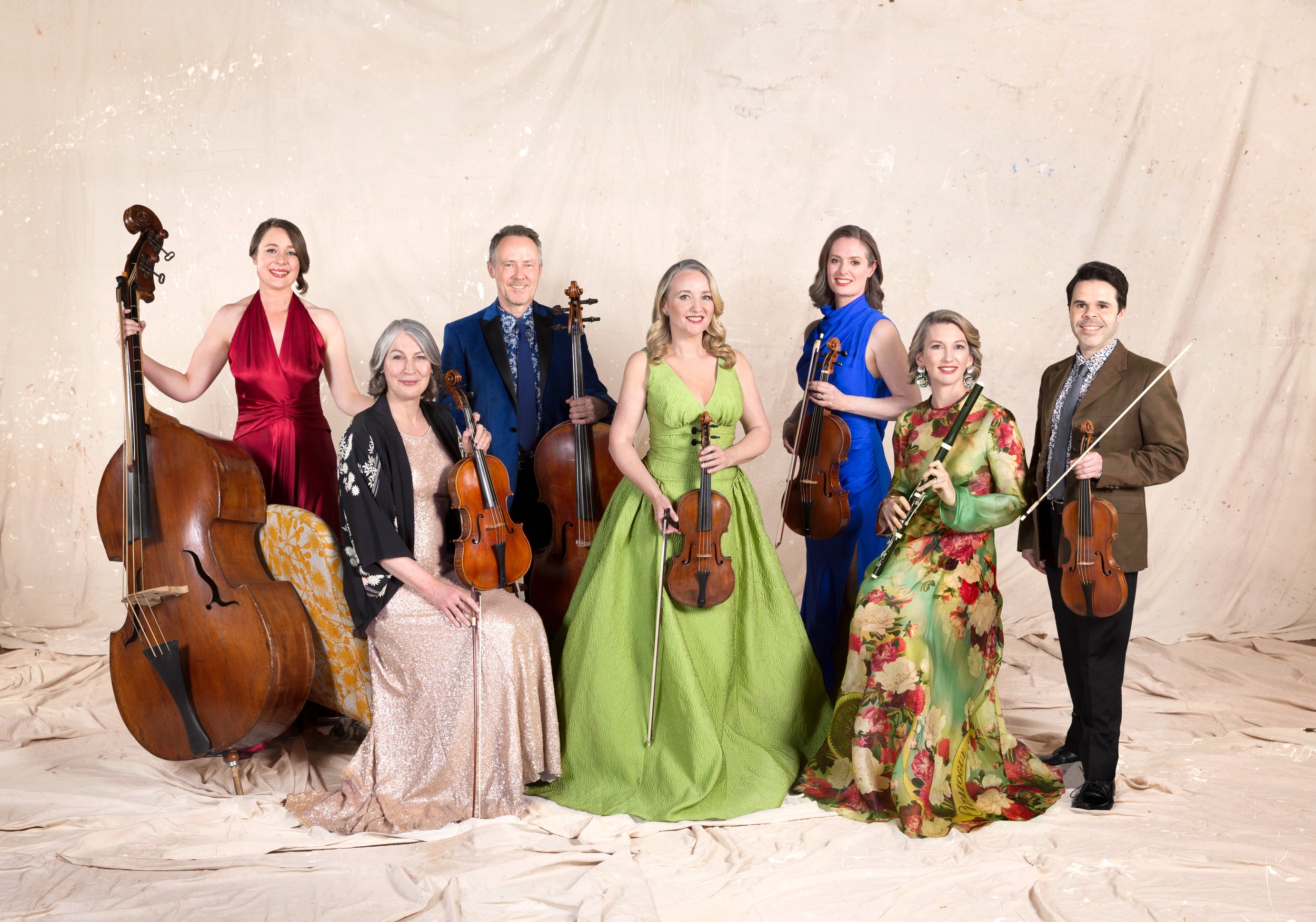
OUR INSTRUMENTS
One of the key things to know about us is that we play on period instruments or accurate replicas from the time the music was composed.
So, what does that mean exactly?
Well, when we perform works by Haydn or Mozart, we use instruments and techniques from the mid to late 18th century that Haydn and Mozart would have known.
For baroque music, by composers like Vivaldi, we switch to instruments set up as they would have been in the earlier part of the 18th century - which means using baroque bows. And when we play Beethoven, we adjust our instruments to match those from the early 19th century.
This approach helps recreate the original listening experience of that time.
There are significant differences between period instruments and modern ones. For instance, our strings are made of sheep gut instead of metal, and our wind instruments often lack the valves found on their modern counterparts and are often made of wood rather than metal, which changes the colour and tone of the sound significantly.
Why do we do this? It's not solely about historical accuracy. It’s about bringing the music to life in a way that the composers would have heard it and it’s also about giving old music a fresh, vibrant feel today. it adds colour and vitality.

“It’s not about recreating the past - it’s about bringing the sounds to life in a way that makes them speak in the most vibrant way possible.”